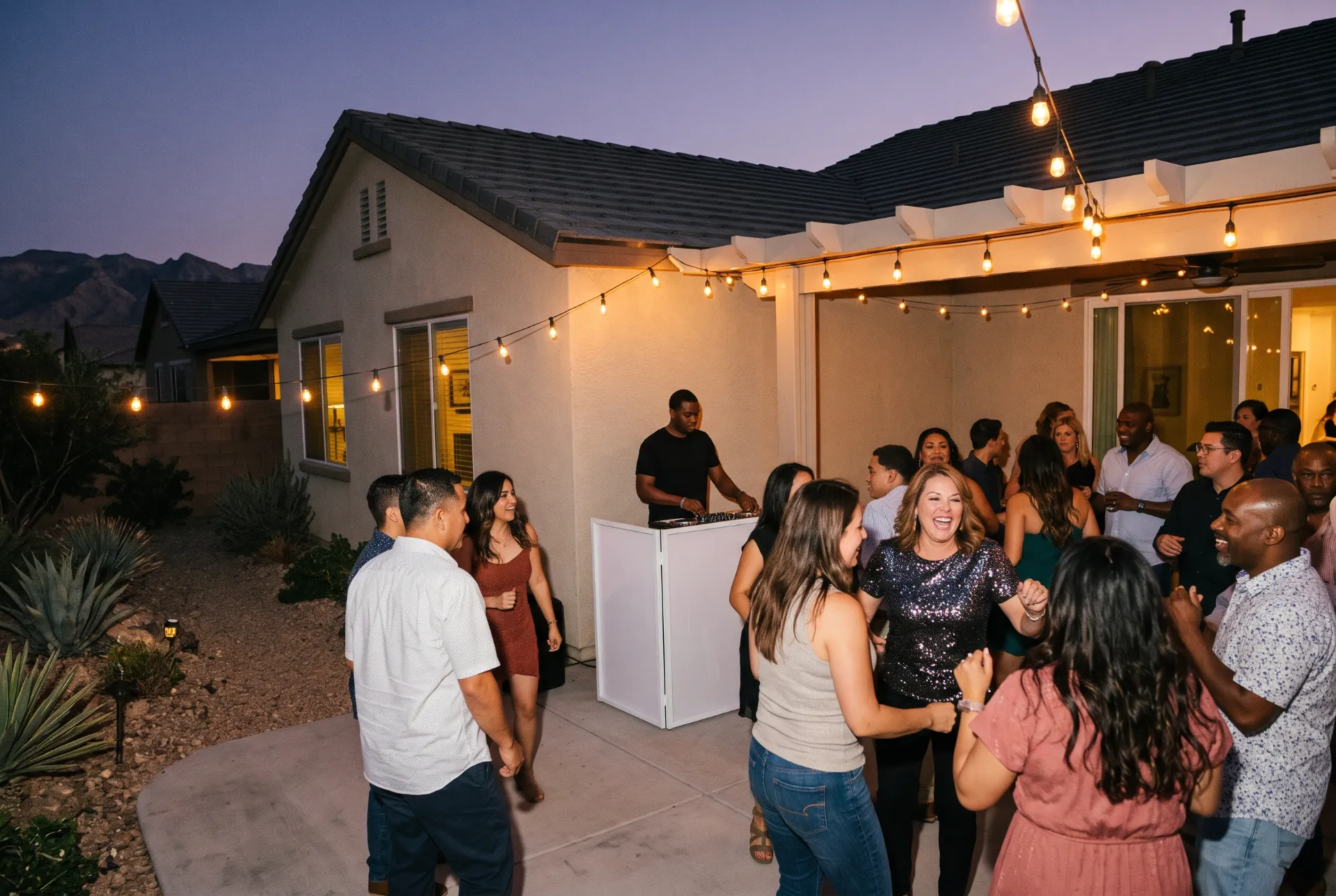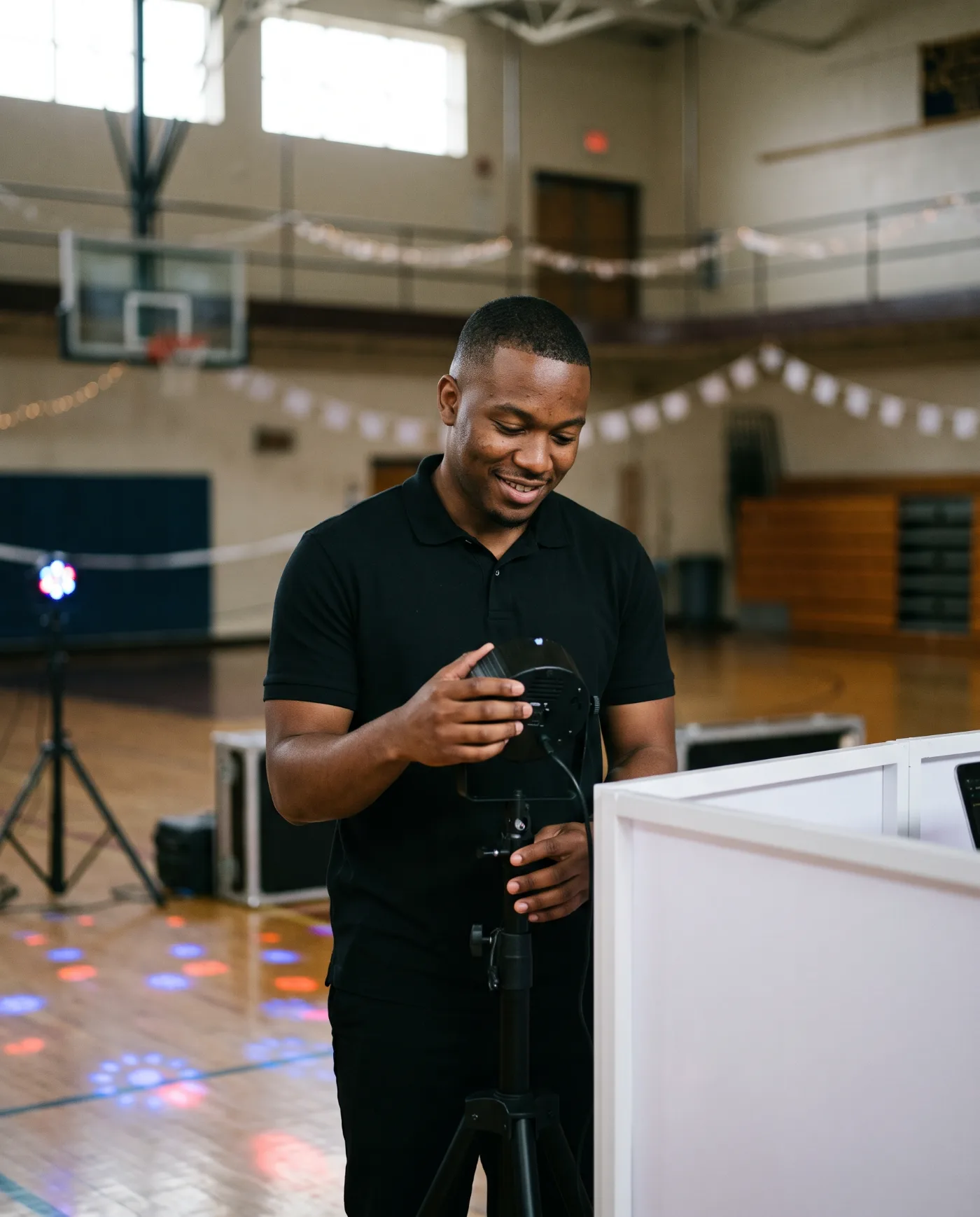
Hiring a professional DJ means bringing heavy audio equipment into an unfamiliar space. Your entertainment team needs a few basic accommodations from the venue to set up safely and start the music on time. Checking these logistical details early in the planning process prevents delays on the afternoon of your event. From electrical outlets to load in access, here is what your DJ requires to deliver clear sound and great lighting for your guests.
Securing a table and power access
The DJ booth requires a dedicated physical space near the dance floor. We need a standard six foot table to hold the mixing board, microphones and lighting controllers. If the venue does not provide tables for vendors, let us know in advance so we can bring our own folding table to the venue.
Reliable electricity is the most critical requirement. A dedicated standard outlet must be located within twenty five feet of the table. Sharing a circuit with catering equipment or photo booths often trips the breaker, so the audio gear needs its own power source to run safely all night.
Coordinating load in and setup time
Moving speakers and lighting rigs requires a clear path from the parking lot to the room. The venue should provide details on where vendors can park and whether there is a service elevator available. Knowing the physical layout ahead of time allows the team to bring the right carts and moving gear.
Proper setup and sound checking takes time. The DJ needs access to the room at least ninety minutes before the start time. Rushing the setup leads to messy cables and skipped sound checks. Giving the team a full hour and a half makes sure the space looks clean and sounds great before guests arrive.
Providing shade for outdoor setups
If your event takes place on a patio or a lawn, the equipment needs protection from the desert weather. Direct sunlight can overheat laptops and other equipment. The venue must offer a shaded location for the DJ booth, or allow a pop up canopy to be placed over the table and the speakers.
The setup area must also be on level ground to keep speaker stands from tipping over. In the event of high wind or sudden rain, the DJ requires a covered spot to move the gear. Protecting the equipment keeps the music playing and prevents costly damage to the electronic components.
Submitting a certificate of insurance
Most professional event spaces require outside vendors to carry liability coverage. A certificate of insurance proves that the entertainment company is financially responsible for any accidental damage caused by their equipment. Venues usually ask for this document a month before the event date.
Crossfade carries general liability insurance for every booking. When you share your venue coordinator contact details with us, we can email the certificate directly to their office. Handling this paperwork early satisfies the venue requirements and keeps your planning process on schedule.